



Ceramic Tint vs Regular Tint: Heat Rejection and UV Protection Compared
Ceramic tint and regular dyed tint differ far more in heat rejection than in UV protection. Both block about 99% of UV when new, but at the same visible light transmission ceramic film rejects roughly 1.5 to 2 times more total solar energy, and it holds that figure for years because inorganic particles do not fade like dye.
What Actually Separates Ceramic Tint From Regular Tint?
Regular tint is dyed polyester. A dye layer absorbs part of the visible spectrum, which produces the dark look, plus a modest share of near-infrared. Because the mechanism is absorption, the captured energy has to go somewhere, and it re-radiates from the glass into the cabin.
Ceramic tint replaces the dye with nano-scale inorganic oxides, usually indium tin oxide (ITO) or antimony tin oxide (ATO). These particles stay clear to visible light while absorbing and reflecting near-infrared, and they contain no metal, so they do not attenuate radio, GPS or toll signals.
The practical result is that darkness and heat rejection separate. A 35% VLT ceramic film can measure cooler inside than a 20% VLT dyed film, which is why "how dark is it" is the wrong first question at the counter.
How Much More Heat Does Ceramic Tint Reject?
Sunlight reaching a vehicle is roughly half near-infrared, about 44% visible light and only about 3% ultraviolet. Heat travels mostly in the infrared band, so a film that only darkens visible light does limited thermal work. The honest metric is Total Solar Energy Rejected (TSER), measured on glass. For architectural projects the equivalent is the solar heat gain coefficient, and the independent body that certifies those ratings explains how both are measured.
| Metric (at ~35% VLT) | Regular dyed tint | Carbon tint | Nano-ceramic tint |
|---|---|---|---|
| Heat control mechanism | Dye absorbs light, re-radiates heat inward | Carbon absorbs, moderate IR control | Ceramic oxides absorb and reflect near-infrared |
| Infrared rejection, 780-2,500 nm | 10-30% | 40-60% | 90-98% |
| Typical TSER | 30-45% | 45-55% | 55-65%+ |
| UV rejection, new | ~99% | ~99% | ~99% |
| UV performance after ageing | Declines as absorbers deplete | Moderate decline | Stable, inorganic particles |
| Colour stability | Can fade or turn purple | Good | Excellent, neutral grey-black |
| Signal interference | None, unless metalized | None | None |
| Typical field life | 3-5 years | 5-8 years | 10 years and above |
| Installer notes | Forgiving to shrink, low cost | Matte finish, moderate formability | Stiffer, needs controlled heat-forming |
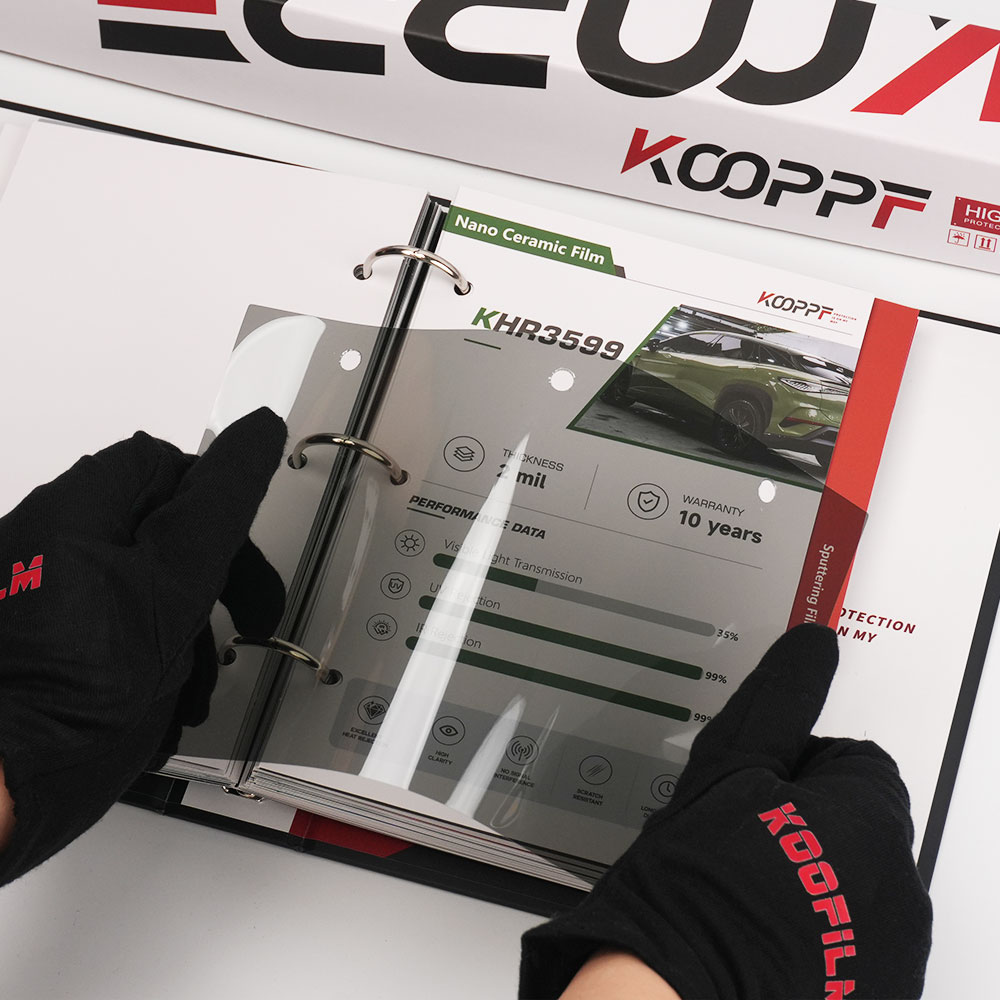
Compare at one fixed VLT only. A darker film of any construction rejects more energy simply by passing less light, and the ceramic advantage narrows on light 70% windscreen grades.
Want the TSER and VLT numbers for every shade we run?
Our nano-ceramic window film range lists VLT, IRR and UV figures shade by shade.
View Nano-Ceramic Window Film SpecsWhy Is "99% Infrared Rejection" a Misleading Number?
No single standard defines infrared rejection. A supplier can test at one wavelength, often 950 nm where ceramic particles peak, and print 98% or 99% on the box. The same film may reject well under half of total solar energy once the full spectrum is counted.
Ask for a spectral curve from 780 to 2,500 nm, measured on glass rather than bare film. A curve shows where rejection holds and where it collapses; a single percentage cannot. Professional buyers treat the headline number as marketing copy.
Does Ceramic Tint Really Block More UV Than Regular Tint?
Barely, not when the film is new. UV absorbers are cheap additives, so a competent dyed film also reaches about 99% rejection across the 280-400 nm band. Anyone selling ceramic purely on a UV figure is charging a premium for a commodity feature.
Dermatology guidance is blunt here: darker tint does not protect better against UV than clear UV-blocking film, and clear film alone can stop about 99% of UVA and UVB. Darkening buys glare and privacy, not extra UV defence. In a vehicle the gap is by glass position: windscreens are laminated and already filter most UV, while side, rear and sunroof glass is tempered and passes UVA, the band that makes up most solar ultraviolet at ground level.
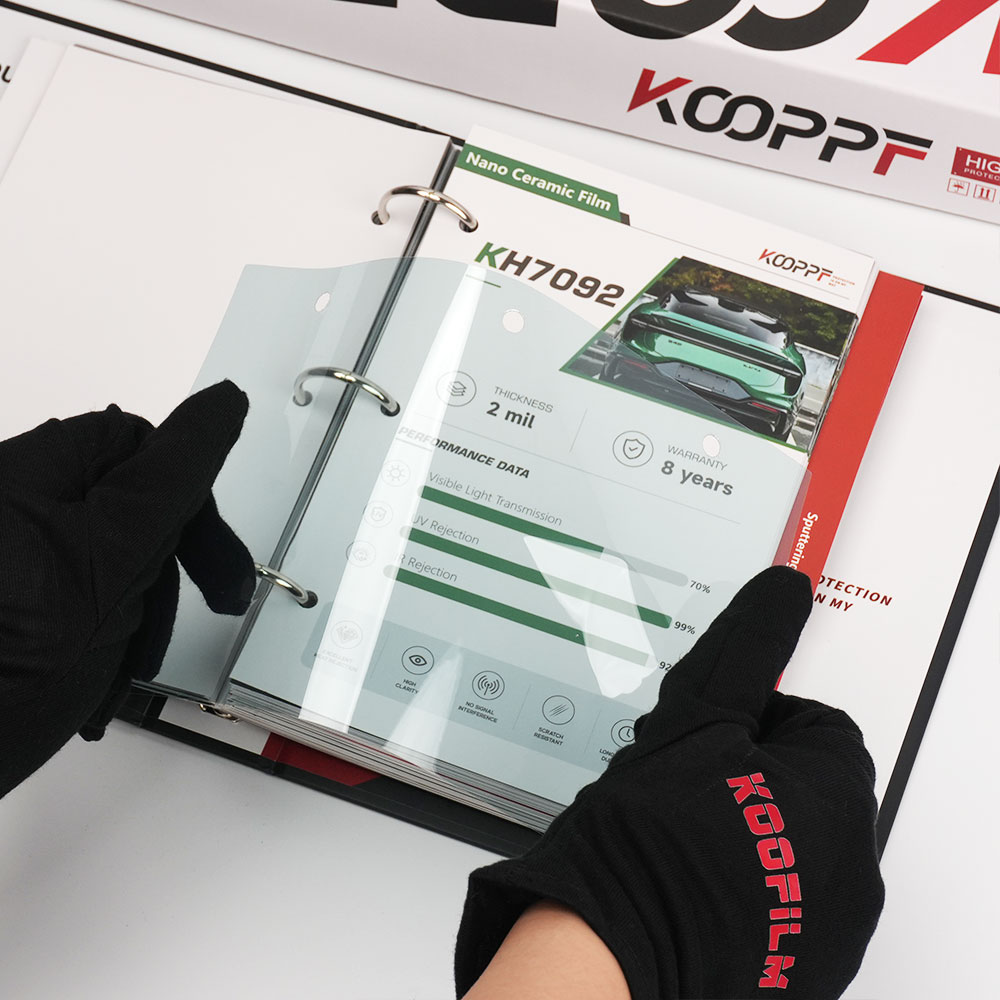
Where ceramic genuinely pulls ahead is retention. In a dyed construction the UV absorber sits in the coating and adhesive and is consumed over years of exposure, the same degradation that turns rear glass purple. Ceramic oxides are inorganic and UV-stable, so the year-five measurement stays close to the number printed at purchase.
Test the film on your own glass before you commit to a container.
A4 samples in nano-ceramic, carbon and metal sputtered grades, 5%-70% VLT.
Order an A4 Window Film SampleWhen Does Regular Tint Still Make Sense?
Price-led retail tiers where the buyer wants privacy and appearance, not thermal performance.
Short-hold assets such as used-car lots, rental fleets and dealer prep.
Mild climates and garaged vehicles with a modest daily sun load.
Rear-glass and second-row bundles, where glare control outweighs heat rejection.
As a value tier, regular tint is legitimate. It only fails when it is priced as ceramic, or specified for a hot-climate daily driver.
How Should Buyers Verify Film Performance Before Ordering?
Get a spectral curve on glass from 780 to 2,500 nm, plus TSER at the exact VLT you are ordering.
Ask for ageing data in hours of xenon-arc weathering to SAE J2527, with colour shift stated as Delta E.
Confirm optical properties are measured to ISO 13837 for automotive glazing, not quoted from an internal sheet.
Check VLT limits for your market, plus federal standards for vehicle glazing, before you cut a single roll.
Inspect liner flatness, adhesive tack, shrink behaviour on compound curves and batch-to-batch colour match.
Frequently Asked Questions
Is ceramic tint worth the extra cost over regular tint?
For a daily driver in a hot climate, usually yes: comfort and a replacement cycle two to three times longer justify it. For appearance-led tiers, the maths rarely works.
Does ceramic tint block more UV than regular tint?
Marginally, and mainly after ageing. Both reach roughly 99% when new, so decide on TSER, colour stability and service life instead.
Will ceramic tint interfere with GPS, phone or toll signals?
No. Ceramic particles are non-conductive. Signal loss comes from older metalized films with a metallic sputter layer, a different product category that is increasingly rare in new stock.
Can ceramic film be installed on a windscreen?
Technically yes, using dedicated 70% VLT or clearer windscreen grades. Legally it depends on the market, since many jurisdictions set a minimum visible light transmission for windscreens and front side glass. Confirm the local limit before quoting.
Sourcing nano-ceramic window film for distribution or private label?
Send your market, shade mix and target volume, and we will reply with spectral data, MOQ and lead time.
Request Distribution Pricing


