

Automotive Paint Protection Film vs Wax: Which Lasts Longer?
Automotive Paint Protection Film vs Wax: Which Lasts Longer?
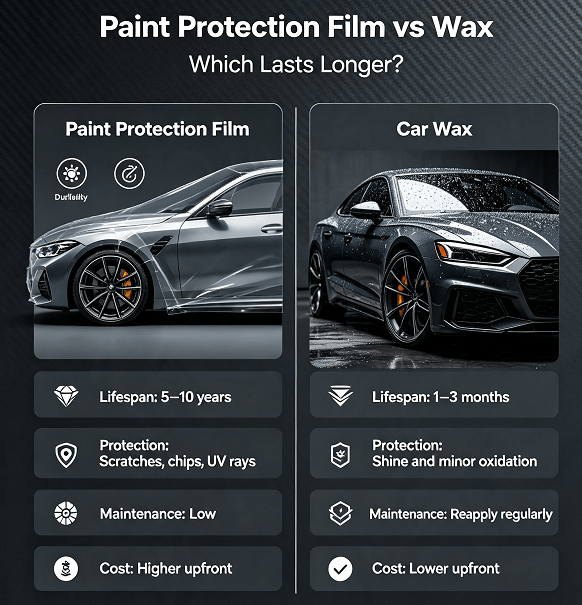
The short answer: A premium automotive paint protection film lasts 5 to 10 years, while traditional car wax lasts just 2 to 6 months.
If you're weighing paint protection options, the durability gap is staggering. Wax requires reapplication every few months—sometimes as often as every two to six weeks depending on the product and weather conditions. A quality clear PPF wrap, by contrast, can protect your vehicle for a decade or more with minimal maintenance.
Here's what you need to know about both options.
Key Takeaways
| Factor | Automotive Paint Protection Film (PPF) | Traditional Wax |
|---|---|---|
| Average Lifespan | 5–10+ years | 2–6 months |
| Reapplication Frequency | Once, with optional maintenance | Every 2–3 months |
| Rock Chip Protection | Yes—absorbs impact | No |
| Scratch Protection | Self-healing technology available | None |
| UV Protection | 99%+ UV block | 50–70% UV block |
| Hydrophobic Properties | Yes, built into the film | Temporary only |
| Initial Cost | Higher investment | Low |
| Long-Term Value | Excellent—preserves resale value | Poor—recurring costs add up |
What Is Traditional Car Wax?
Waxing has been the go-to method for car enthusiasts for decades. It's simple, affordable, and gives your paint a temporary glossy finish.
How wax works: You apply a layer of natural carnauba wax or synthetic sealant to your car's paint. This creates a thin, temporary barrier that enhances shine and provides modest water repellency. The process takes anywhere from 30 minutes to a few hours, and many car owners do it themselves.
The problem: Wax doesn't last. A typical carnauba wax job lasts just two to six weeks. Even premium synthetic waxes rarely exceed three to four months of protection. This means you're waxing your car four to six times per year—every single year.
What Is Automotive Paint Protection Film?
Paint Protection Film (PPF), often called a "clear bra" or clear PPF wrap, is a transparent, urethane-based film applied directly to a vehicle's painted surfaces. Unlike wax, which sits on top of the paint, PPF becomes a permanent part of your vehicle's exterior protection system.
How PPF works: The film consists of multiple layers—including a clear coat, polyurethane layer, adhesive, and release liner. This combination creates a flexible yet durable surface that conforms to your car's curves while absorbing impacts from rocks, debris, and daily driving hazards.
Premium PPF also features self-healing PPF technology. The top coat contains elastomeric polymers that are not fixed in a rigid lattice. When a scratch occurs—essentially a displacement of these polymers—the introduction of heat (from sunlight, a warm engine, or hot water) excites the molecules, allowing them to return to their original position. The scratch disappears.
Automotive Paint Protection Film vs Wax: The 6 Key Differences
1. Durability: The Night-and-Day Difference
This is where PPF completely outclasses wax. A high-quality automotive paint protection film lasts 5 to 10 years with proper care. Some premium films are backed by 10-year warranties against yellowing, bubbling, and cracking.
Wax, by contrast, lasts 2 to 6 weeks for natural carnauba wax and up to 3 to 4 months for synthetic sealants. You're reapplying wax four to six times per year—every year.
The math: Over 10 years, you'll wax your car 40 to 60 times. A single PPF installation covers you for the entire decade.
2. Protection: Surface-Level vs Armor-Level
Wax provides a thin, temporary barrier that offers modest UV protection and water repellency. It does absolutely nothing to stop rock chips, door dings, or scratches.
PPF provides genuine physical protection. The urethane layer absorbs impacts from road debris, gravel, and stone chips. It shields your paint from environmental contaminants, UV rays, acid rain, and even harsh road salts.
Self-healing PPF takes protection a step further. Minor scratches and swirl marks disappear with heat exposure. Your car's finish stays flawless without additional intervention.
3. Cost: Short-Term vs Long-Term Investment
Wax costs: $20 to $100 per application. At four to six applications per year, you're spending $80 to $600 annually. Over 10 years, that's $800 to $6,000—and you still have an unprotected car.
PPF costs: Full-vehicle PPF typically ranges from $2,500 to $8,000+. The upfront cost is significantly higher, but you pay once and protect your vehicle for a decade.
The value equation: PPF protects your factory paint, which preserves your vehicle's resale value. A car with pristine original paint can sell for thousands more than one with chips, scratches, and faded clear coat. When you factor in repainting costs—which can run $500 to $3,000 per panel—PPF often pays for itself.
4. Maintenance: Minimal Effort vs Constant Reapplication
Wax requires constant effort. You're washing, drying, and applying wax every few months—rain or shine, winter or summer.
PPF requires minimal maintenance. Wash your car regularly with pH-neutral soap, avoid abrasive brushes, and the film does the rest. The hydrophobic surface repels water and contaminants, making cleaning easier. The self-healing PPF top coat keeps minor scratches from becoming permanent eyesores.
5. Appearance: Warm Glow vs Factory Finish
Wax creates a warm, deep shine that many car enthusiasts love. But that shine fades as the wax wears off, and you're left with unprotected paint until your next application.
PPF provides a crystal-clear, virtually invisible layer that preserves your car's factory finish. High-quality clear PPF wrap enhances gloss without altering the paint's natural appearance. Matte and satin finishes are also available for customized looks.
6. Environmental Protection: Temporary vs Permanent
Wax offers temporary protection against UV rays (50–70% block rate) and moderate water repellency. It breaks down from sun exposure, rain, and washing—requiring constant reapplication.
PPF provides permanent protection against UV rays (99%+ block rate), chemical contaminants, acid rain, bird droppings, and road salts. The film is engineered to withstand years of environmental exposure without degrading.
Why Choose KOOPPF Automotive Paint Protection Film?
When you're ready to move beyond temporary wax protection, KOOPPF delivers premium automotive paint protection film that lasts.
Superior durability: KOOPPF clear PPF wrap is engineered with premium aliphatic TPU and advanced self-healing PPF technology. The film maintains optical clarity and protective performance for 7 to 10 years—backed by comprehensive warranty coverage.
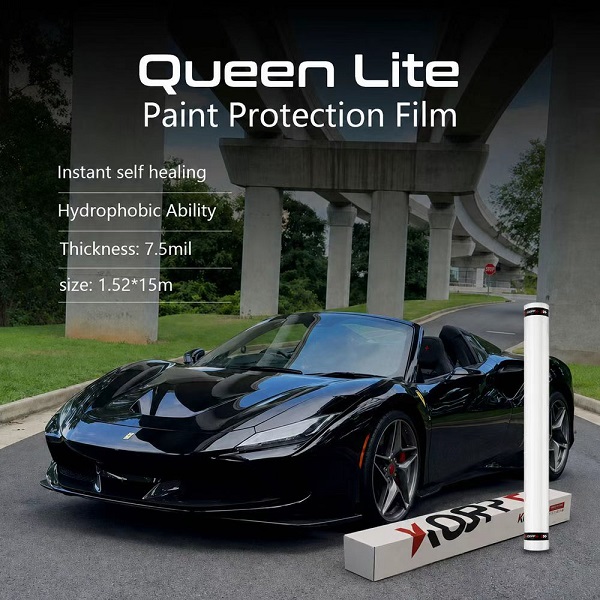
Self-healing protection: Minor scratches and swirl marks disappear with heat exposure. Your vehicle's finish stays flawless without repeated waxing or polishing.
Factory-direct value: As a leading PPF manufacturer, KOOPPF eliminates middleman markup. You get premium-quality automotive paint protection film at competitive wholesale pricing.
OEM/ODM capabilities: KOOPPF supports private labeling, custom packaging, and flexible roll sizes for distributors and installers building their own brand.
Global supply chain: With a 50,000m² manufacturing facility and 80,000+ rolls monthly capacity, KOOPPF delivers reliable supply for bulk orders worldwide.
Choose protection that lasts—not protection that fades. KOOPPF automotive paint protection film gives you years of defense against rock chips, scratches, UV damage, and environmental contaminants. One installation. Ten years of peace of mind.
Frequently Asked Questions
How long does automotive paint protection film actually last?
Premium PPF lasts 5 to 10 years with proper care. KOOPPF clear PPF wrap is engineered for long-term durability and backed by comprehensive warranty coverage against yellowing, cracking, and bubbling.
How often do I need to wax my car?
Traditional carnauba wax lasts 2 to 6 weeks. Synthetic waxes last 3 to 4 months. Most car owners wax their vehicles four to six times per year—every single year.
Does PPF really protect against rock chips?
Yes. PPF is specifically designed to absorb impacts from road debris and stone chips. Wax provides zero protection against physical impacts.
What is self-healing PPF and does it actually work?
Self-healing PPF uses elastomeric polymers in the top coat. When scratched, heat from sunlight or warm water causes the polymers to return to their original position, making the scratch disappear. It works on minor scratches and swirl marks.
Is PPF worth the cost compared to wax?
Yes. While PPF has a higher upfront cost, it lasts 5 to 10 years and protects your vehicle's resale value. Wax requires constant reapplication at $80 to $600 per year—and provides minimal actual protection. Over time, PPF is the more cost-effective choice.
Can I apply PPF myself?
Professional installation is strongly recommended. PPF requires precise application techniques, specialized tools, and experience to achieve bubble-free, edge-sealed results. Improper installation can lead to peeling, lifting, and premature failure.
This article is based on industry research, manufacturer specifications, and real-world performance data. Individual results may vary based on film quality, installation expertise, driving conditions, and maintenance practices.