

Matte vs Glossy PPF: Which is Better for Your Car?
Matte vs Glossy PPF: Which is Better for Your Car?
You just bought a new car. Now you are thinking about paint protection film options. The biggest choice is the finish. Matte vs gloss PPF gives the same core protection against rock chips, scratches, and UV damage. But they differ a lot in looks and upkeep. So, which is better for your car? The answer depends on your personal style, where you drive, and how much maintenance you can handle.
This post compares appearance, maintenance, and durability. It gives you a practical guide to help you pick the right finish for your vehicle. A reliable PPF supplier makes sure you get premium car paint protection and a smooth matte vs glossy car finish.
Understanding PPF and Its Finishes
What Is Paint Protection Film?
Paint protection film is a thermoplastic urethane layer that shields your car's paint from physical and environmental damage. This transparent armor absorbs impacts from rock chips, resists scratches from daily driving, and blocks harmful UV rays that cause fading.
The market reflects this growing demand. Modern PPF offers several standard features that make it indispensable for vehicle owners:
Elasticity and recovery: TPU stretches and returns to shape without permanent deformation, allowing the film to absorb rock impacts.
Optical clarity: High-quality TPU achieves 95%+ clarity, making the film essentially invisible on the paint surface.
UV resistance: TPU contains UV stabilizers that prevent yellowing and degradation over time.
Chemical resistance: The material resists road salt, bird droppings, tree sap, and automotive cleaning products.
Temperature range: TPU maintains its properties from freezing conditions to 170+ degree surface temperatures.
Self-healing capability: The molecular structure allows surface scratches to heal when exposed to heat from sunlight, warm water, or body heat.
These properties explain why paint protection film has become a standard investment for discerning car owners.
Matte vs Gloss: The Two Main Finishes
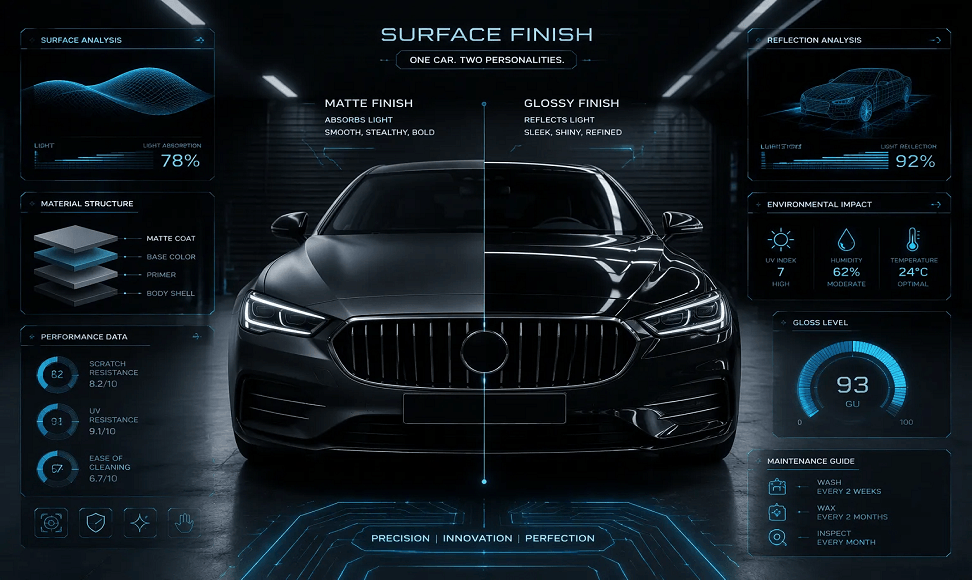
You can choose between two primary finishes for your protection layer. Each delivers the same protective benefits but creates a completely different visual character for your vehicle.
| Aspect | Gloss PPF | Matte PPF |
|---|---|---|
| Light Reflection | High reflectivity, mirror-like finish; enhances shine and depth | Low reflectivity, non-reflective; diffuses light to create a satin look |
| Surface Texture | Smooth, silky texture | Textured, tactile surface with micro-textured finish |
KOOFILM offers both options through their product lines. Their clear PPF delivers a high-gloss, self-healing solution that amplifies your paint's natural depth. The Shadow Walker series provides a premium matte PPF finish for owners seeking a stealthy, sophisticated appearance.
When you compare matte vs gloss PPF, you're really deciding between two distinct personalities for your car. The glossy option amplifies factory paint brilliance. The matte finish transforms the vehicle into something bold and unconventional. Your choice depends on the statement you want your car to make.
Matte vs Gloss PPF: Key Differences
Appearance and Aesthetic Impact
The biggest difference between matte and gloss PPF is how each one changes your car's look. Gloss PPF makes your paint deeper and clearer. It gives a mirror-like shine that makes colors pop. Picture a sports car under bright showroom lights. The glossy surface highlights every curve and line. It keeps that fresh, polished showroom style. This option suits cars built to grab attention.
Matte PPF changes the surface in a different way. It spreads out light and cuts down glare. The result is a smooth, satin look that feels classy and unique. Off-road SUVs and luxury sedans often use this finish for a bold, modern vibe.
Your choice really comes down to what look you want. The table below shows how the two finishes compare.
| Aspect | Gloss PPF | Matte PPF |
|---|---|---|
| Light reflection | High reflectivity; acts like a spotlight on paint depth | Low reflectivity; diffuses light for a satin look |
| Imperfection visibility | Shows scratches and swirl marks more clearly | Hides minor imperfections and wear better |
| Visual impact | Classic polished look; enhances color richness | Subdued, sophisticated; looks more exclusive |
Maintenance and Cleaning Requirements
The cleaning routine for each finish is quite different. Glossy is easier to care for. You can use regular car soap and water. The smooth surface lets dirt wash off without much effort. You can also add wax or sealants to boost shine. This makes it a good pick for everyday drivers.
Matte PPF needs more attention. Its rough surface traps dirt and oils. You must use special matte-safe products. Anything with wax, silicone, or gloss enhancers will leave permanent shiny marks. Fingerprints show up about 30% more on matte surfaces in direct sunlight.
You should wash a matte finish every 1-2 weeks, while glossy only needs it every 3-4 weeks. Use pH-neutral soaps (pH 6-8) and wash by hand only. Stay away from harsh brushes, strong chemicals, and automatic car washes. Add matte-specific protective coatings to make it last about 20% longer and cut cleaning time by about 15%. Use pure demineralized water or dry the car right away to avoid water spots.
Both finishes protect equally against rock chips, UV damage, and scratches. KOOFILM's hydrophobic coatings make cleaning easier for both types. These coatings push away water and dirt, so you spend less time scrubbing.
| Maintenance Aspect | Glossy | Matte |
|---|---|---|
| Recommended wash frequency | Every 3-4 weeks | Every 1-2 weeks |
| Compatible products | Standard soaps, waxes, sealants | Specialized matte-safe products only |
| Buffing/polishing | Responds well to buffing | Not possible; abrasions linger |
| Surface hardness | ~3H (harder) | ~2H (softer, scratch-prone) |
Durability and Scratch Resistance
How Each Finish Holds Up Over Time
Both matte and gloss PPF give the same core protection against rock chips, scratches, and environmental damage. The thermoplastic urethane build absorbs impacts from road debris and resists chemical stains from bird droppings, bug splatter, and road tar. So your paint stays safe no matter which finish you pick.
The real difference shows up in how each surface ages with daily use. Matte PPF has a textured surface that hides minor wear well. But that same texture makes the film more likely to show water spots and fingerprints. You will notice these marks more on a matte surface, especially after rain or a wash.
Gloss PPF offers a smoother surface that resists water spotting better. Yet glossy finishes tend to reveal swirl marks and fine scratches more clearly over time. The trade-off is simple: matte hides scratches but shows smudges, while glossy hides smudges but shows scratches.
KOOFILM builds both film types with self-healing tech and UV resistance. When you apply heat from sunlight or warm water, minor scratches vanish from the surface. This feature keeps your vehicle looking good for years. The UV blockers stop yellowing and discoloration, so your paint protection film stays clear and effective. Both finishes offer long-term protection that preserves your car's resale value.
Hiding Swirl Marks and Minor Imperfections
Each finish handles imperfections very differently. Glossy surfaces boost light reflection, which makes swirl marks and fine scratches stand out. The good news is you can fix these marks easily. A gentle polish or heat application removes them without harming the film. This makes gloss PPF a smart choice for owners who want simple maintenance.
Matte surfaces scatter light instead of reflecting it. This feature naturally hides minor scratches and swirl marks from view. But you cannot polish a matte finish. Abrasive compounds will leave permanent shiny patches that ruin the satin look. You must use special matte-safe cleaners and avoid any product with wax or gloss enhancers.
For scratch protection, both finishes work equally well against rock chips and road debris. The difference lies in how you handle the inevitable minor wear. Glossy lets you fix imperfections with heat or polish. Matte needs careful prevention and special care. Your maintenance tolerance should guide your choice.
If you prefer low-effort upkeep, glossy suits you better. If you want a unique look and accept extra care, matte delivers a striking result. Either way, KOOFILM's films provide durable protection that keeps your vehicle looking sharp for years.
Cost Comparison: Matte vs Glossy PPF
Initial Installation Costs
The price difference starts with installation. Matte PPF usually costs 10–25% more than gloss film from the same brand. This extra cost comes from special manufacturing and more quality checks. You pay more at first for that unique satin look.
| Coverage | Gloss PPF (USD) | Matte/Satin PPF (USD) |
|---|---|---|
| Partial front | $600–$1,500 | $800–$1,800 |
| Full front | $1,500–$3,500 | $2,000–$4,000 |
| Full vehicle | $4,000–$8,000+ | $5,000–$9,000+ |
For a full vehicle, the gloss middle price is about $6,000. The matte middle price is about $7,000. That $1,000 gap is roughly 16.7% of the gloss price. Experts say installation costs also change with vehicle type. Cars with tricky curves or extra features need more film and careful work.
Where you live matters too. Local economy and distributor practices affect both material supply and installation fees. A car with a sunroof may have different labor costs than a standard model. Ask for custom quotes to plan your budget well.
Long-Term Value and Resale Impact
Both finishes protect your car, but they affect resale differently. Paint protection film keeps original paint safe, which helps hold value. However, buyer tastes create a clear gap between finishes.
| Metric | Matte PPF | Gloss PPF |
|---|---|---|
| Resale value impact | May be lower than gloss due to niche appeal | Baseline (no reduction) |
| Buyer preference | Less common, appeals to a niche | More widely preferred |
| Annual maintenance cost | Higher due to specialized products | Baseline |
Matte finishes often attract younger buyers who prefer a unique look. Yet traditional luxury sedans may see a resale value reduction after five years. Matte film can increase the time on the market. The matte penalty is more significant on regular luxury sedans. Switching from matte to gloss may involve additional costs for removal and reapplication.
KOOFILM offers top quality at fair prices. Their steady batches and warranties ensure your glossy or matte finish works well. This long-term protection keeps your car looking good and holding value. Pick the finish that fits your goals. If you plan to sell within five years, glossy appeals to more buyers. If you keep your car long-term and love unique looks, matte gives you satisfaction despite the extra cost.
Pros and Cons of Glossy PPF
Benefits of a Glossy Finish
Glossy PPF gives your car that classic showroom look most people love. This film keeps your paint's original shine and adds extra depth and clarity. The high-gloss finish creates a wet-look style that makes colors seem richer and brighter. Unlike matte film, which changes your car's personality, glossy PPF boosts what is already there. Your car just looks better, cleaner, and more polished.
The glossy PPF benefits go beyond looks. This finish hides dirt well between washes. Regular car soap and detailing products work fine, so you do not need special cleaners. The film's self-healing topcoat has elastomeric polymers that remove small scratches when heated. Heat from sunlight, warm water, or body heat triggers this repair. Professional removal leaves your original paint untouched.
| Benefit | What It Means for You |
|---|---|
| Protection | Shields against scratches, marring, and stone chips |
| Self-healing | Minor marks vanish with heat exposure |
| Low maintenance | Regular washes only; no special products |
| Removable | Professional removal without paint damage |
| Visual enhancement | Adds depth, clarity, and a wet-look shine |
Partial front-end coverage ranges from $600 to $1,500, while full front-end protection ranges from $1,500 to $3,500. These prices include paint correction and professional installation. The investment delivers maximum shine and lasting protection for your vehicle.
Drawbacks to Consider
Glossy surfaces reflect light strongly, so swirl marks and fine scratches show up more in bright sunlight. This problem appears fast in sunny areas, especially on darker car colors. The glossy finish shows wash-induced micro-marring as spider-web patterns that catch your eye.
You can fix these flaws with careful polishing. Follow these steps to avoid harming the film:
Use a dual-action polisher on a low-speed setting to prevent excess heat buildup.
Select polishes and pads designed specifically for PPF use.
Test a small, inconspicuous area first to confirm product safety.
Apply light pressure and let the machine do the work.
Take cooling breaks between passes to protect the film.
Inspect regularly to ensure you achieve the desired result.
The biggest issue is that glossy surfaces, including glossy film, can show wash-induced micro-marring as swirl marks under bright sunlight. In North Georgia, that can happen quickly because strong sun and dark vehicle colors highlight any fine scratches.
Installation typically takes a day or more, so you must leave your car overnight. You cannot wash the vehicle for a period after application as recommended by the installer. Avoid naphtha, kerosene, and dyes near the film edges. Poor installation causes dirt and bubbles, so verify your installer's training.
Glossy PPF also retains fingerprints and smudges more readily than satin finishes. Regular washing every three to four weeks becomes necessary to keep the surface pristine. This finish may not suit owners seeking a unique, non-reflective look. If you want your car to stand out with a stealthy appearance, glossy film delivers the opposite effect.
Pros and Cons of Matte PPF
Benefits of a Matte Finish
Matte PPF gives your car a unique look that stands out. The surface does not reflect light. Instead, it creates a soft, satin appearance. Your car gets a flat, bold, and stealthy style. The finish turns the original shiny surface into a smooth, even sheen with a nice texture. It does not change the color's depth. It just adds a clean, classy look.
This finish also offers practical perks beyond style. It hides small flaws like fine swirls and light marks that a glossy surface would make more visible. That makes the film easier to work with during installation and everyday use.
Matte PPF also helps factory matte paint. The film keeps the finish consistent while adding strong protection against rock chips and environmental damage. You can also put it over any glossy paint to get that flat, non-reflective look. Matte paint protection film suits drivers who like a modern and subtle visual style. The satin finish cuts down reflections, so the car's shape becomes the main focus instead of the shine.
Drawbacks to Consider
Matte PPF needs a specific cleaning routine. You cannot use regular waxes, polishes, or harsh cleaners. These products leave permanent shiny spots that ruin the satin look. The table below shows what is safe and what to avoid.
| Safe for Matte PPF | Avoid for Matte PPF |
|---|---|
| pH-neutral soap without gloss enhancers | Traditional waxes and glazes |
| Matte-specific detail spray | Polishing compounds and rubbing compounds |
| Film-approved contaminant remover | Household cleaners like glass cleaner or degreasers |
| Ceramic coating for matte surfaces | Automatic car washes with brushes |
Water spots and fingerprints are another issue. Hard-water minerals and stains show up more easily on the textured surface. You need to wash gently with a microfiber mitt and car shampoo, rinse well, and dry with a soft towel. Regular cleaning stops buildup and keeps the finish looking fresh. Satin films do hide fingerprints better than high-gloss options, but they still need care.
Cost is also a factor. Matte PPF usually costs 10–25% more than glossy film from the same brand. This price difference comes from special manufacturing and extra quality checks. You pay more for the unique look. If you want low-effort upkeep, this finish may test your patience. But if you like a bold, modern style and accept the extra care, matte gives a striking result that turns heads.
Matte vs Gloss: How to Choose
Choosing between matte and gloss PPF comes down to three main things: your style, your vehicle type, and your budget. Both finishes give the same paint protection film benefits, but they serve different needs. You need to pick the finish that fits your lifestyle, not just what looks good.
Factors to Weigh: Style, Vehicle Type, and Budget
Your taste matters the most. Glossy film boosts factory shine and brings out curves. It gives that showroom sparkle most buyers know. Matte film cuts glare and creates a smooth, understated look. It turns a regular car into something bold and different.
| Factor | Gloss PPF | Matte PPF |
|---|---|---|
| Style | Boosts shine, brings out curves, showroom-like finish | Classy, unique, cuts glare, smooth understated look |
| Vehicle Type | Great for luxury cars showing curves; works for partial coverage | Best for full-car coverage, simple aesthetics, changes glossy paint |
| Maintenance | Easier to clean but shows smudges and fingerprints | Needs more careful cleaning with special products |
| Durability | Long-lasting, typically 7-10 years lifespan | Long-lasting, typically 7-10 years lifespan |
Your vehicle type also helps you decide. Gloss PPF fits luxury sedans and sports cars where paint depth matters. You can put it on just the hood or front bumper for partial coverage. Matte PPF works best as a full-car wrap. It changes glossy paint into a flat, stealthy look. Factory matte cars need matte film as a must, not a choice.
Choose Gloss PPF if you want to keep factory gloss, like a high-shine showroom look, and accept regular cleaning to avoid visible smudges. Choose Matte PPF if you want a unique satin finish, like hiding minor flaws, and feel okay using matte-specific cleaning products with pat-drying methods.
Cleaning routines differ a lot. Gloss PPF washes easily with pH-balanced shampoo. You can add ceramic coating for extra shine. Matte PPF needs dedicated matte-safe products. Avoid waxes and polishes completely, as they create uneven sheen.
Cost plays a practical role. Matte PPF usually costs 10–25% more than gloss due to material complexity. Installation labor stays the same, so the overall cost difference remains small. Your style preference should drive the final call, not the tiny price gap.
Selecting a Trusted PPF Supplier
The finish matters, but the supplier matters more. A reliable PPF supplier ensures your film works as promised for years. You need a partner with proven quality control and steady manufacturing.
| Quality Indicator | What to Verify |
|---|---|
| Material Stability | Tests for yellowing resistance, hydrolysis resistance, tensile strength, elongation at break; third-party certifications |
| Batch Consistency | Supplier-owned lab, consistent batch testing and inspection records |
| Warranty Coverage | Comprehensive warranty covering adhesive failure, peeling, cracking, yellowing, hydrolysis |
A trustworthy PPF supplieruses virgin-grade TPU and tests thermal self-healing, hydrophobic anti-fouling, and anti-yellowing properties. They use dual-level inspection with visual checks and lab aging tests. Individual batch traceability codes reduce gloss and haze differences between rolls.
KOOFILM shows these standards. As a global manufacturer, they control the whole production chain from TPU base film casting to precision coating. Their large-scale facility ensures material stability and batch consistency that small factories cannot match.
When you check a PPF supplier, ask about warranty terms and technical after-sales support. Confirm they offer formal documentation. Request sample testing over datasheet parameters. A good supplier stands behind their product with clear policies.
Your matte vs gloss PPF decision finally balances style, practicality, and trust. Pick the finish that fits your car and your habits. Then partner with a supplier who delivers quality you can verify. That combination gives you lasting protection and peace of mind.
Both matte and gloss PPF deliver robust protection against rock chips, scratches, and UV damage. Your choice ultimately comes down to aesthetics and maintenance commitment. Glossy PPF enhances paint depth and cleans easily with standard products. Matte PPF delivers a bold, modern look but demands specialized care to avoid shiny patches.
No universal "better" option exists. You must align the finish with your lifestyle and preferences. Consider your driving environment, cleaning habits, and desired appearance before deciding. Consult a professional installer to see both finishes in person. Ask about reputable brands like KOOFILM for quality assurance. Weigh the long-term value of your investment. Choose the paint protection film that fits your car and your routine. Protect your vehicle with confidence, knowing either finish shields your investment effectively.
FAQ
How long does each finish last?
Both glossy PPF and matte PPF last about the same time. Both typically last 7-10 years, depending on the model. The thermoplastic urethane build resists yellowing and wear. Your driving conditions and how you care for the car decide the real lifespan. With proper care, either finish can reach its full lifespan.
Can I wash my car normally with matte PPF?
No, you need special care. Matte PPF needs pH-neutral soap without gloss enhancers. Regular waxes and polishes leave shiny marks that never go away. Use a microfiber mitt and pat-dry with a soft towel. Stay away from automatic car washes with brushes. Glossy finishes work fine with regular car soap and standard detailing products.
Does matte PPF protect against rock chips as well as gloss?
Yes, both finishes give the same impact protection. The thermoplastic urethane layer absorbs rock chips, road debris, and scratches equally. The only difference is looks and upkeep. Your paint protection film choice does not lower safety. Pick the finish that fits your style and how much care you want to give.
Will either finish hurt my car's resale value?
Gloss PPF appeals to more buyers. Matte finishes draw younger buyers but may lower resale value compared to gloss on regular vehicles. If you plan to sell in the near term, glossy works best in most markets. Long-term owners who like unique looks find matte worth the extra cost.