Color PPF vs Traditional Paint: Which Offers Better Protection?
2026-08-31 | View:150
Color PPF vs Traditional Paint: Which Offers Better Protection?
Color PPF vs Traditional Paint: Which Offers Better Protection?
When it comes to protecting your car's finish, color PPF outperforms traditional paint in nearly every measurable way. If you're weighing durability, maintenance, and resale value, the choice is clear—color PPF is the superior investment. This film delivers unmatched vehicle protection while preserving your paint's integrity. In this guide, we'll break down the numbers and real-world benefits to help you make an informed decision.
Key Takeaways
Color PPF gives your car better protection than paint. The film heals scratches and blocks UV rays. Your car's paint stays like new. Color PPF saves you money over time. It needs no waxing or polish. It lasts 10 years. Traditional paint needs repainting sooner. Color PPF keeps your car's value high. It guards the original paint. You can remove the film later. Your car looks factory fresh.
Defining the Basics: Color PPF vs. Paint
What Is Color PPF?
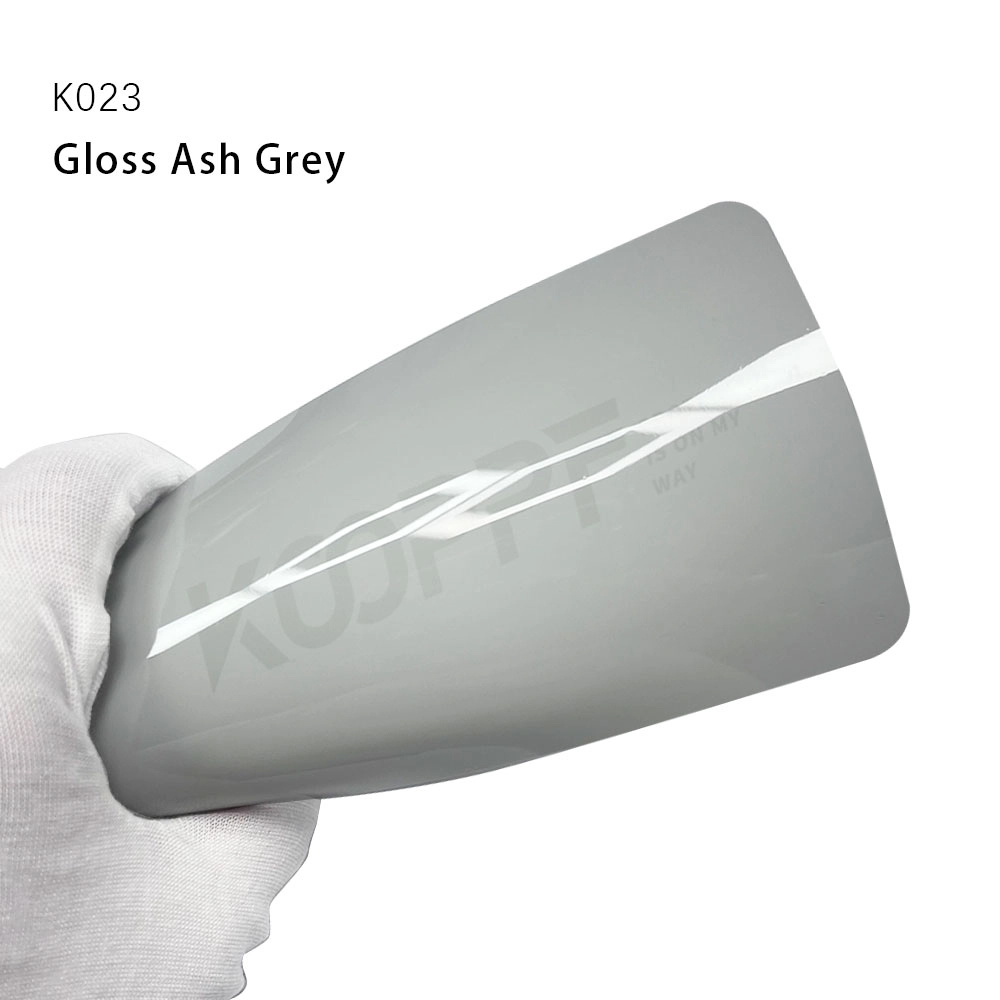
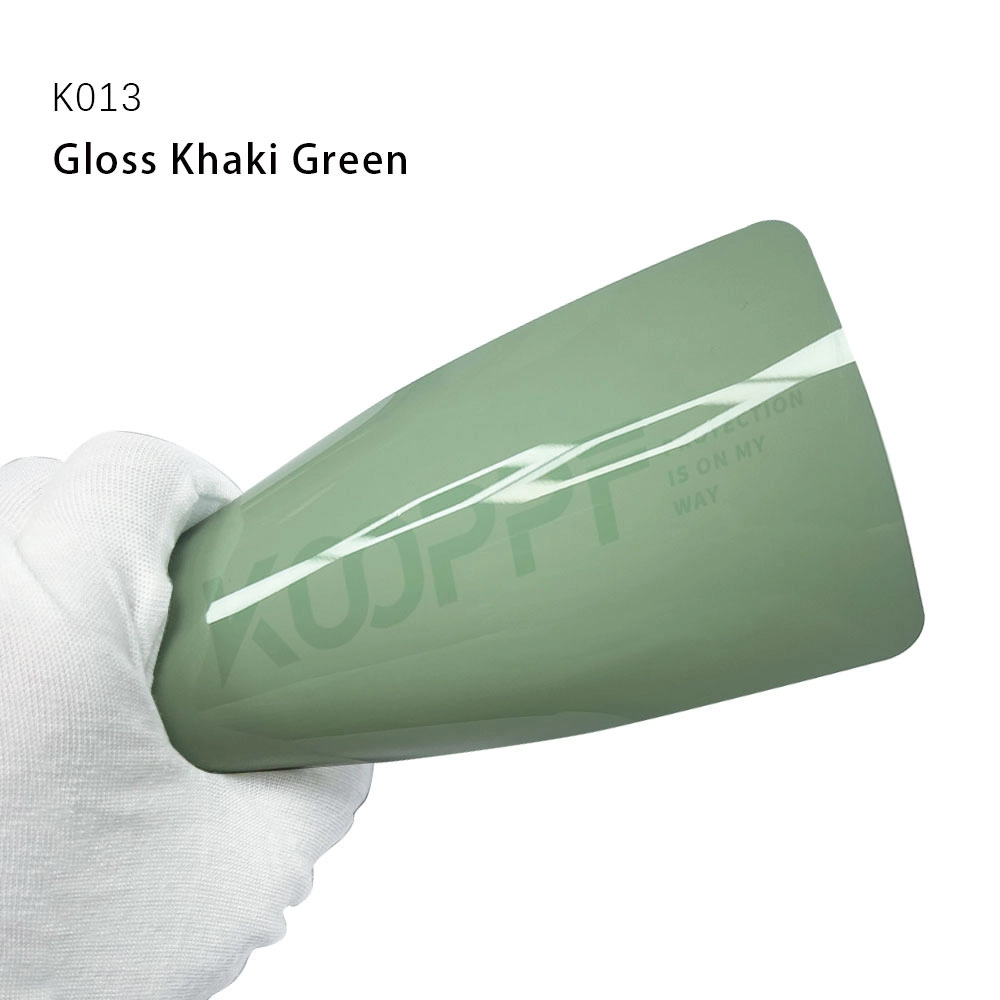
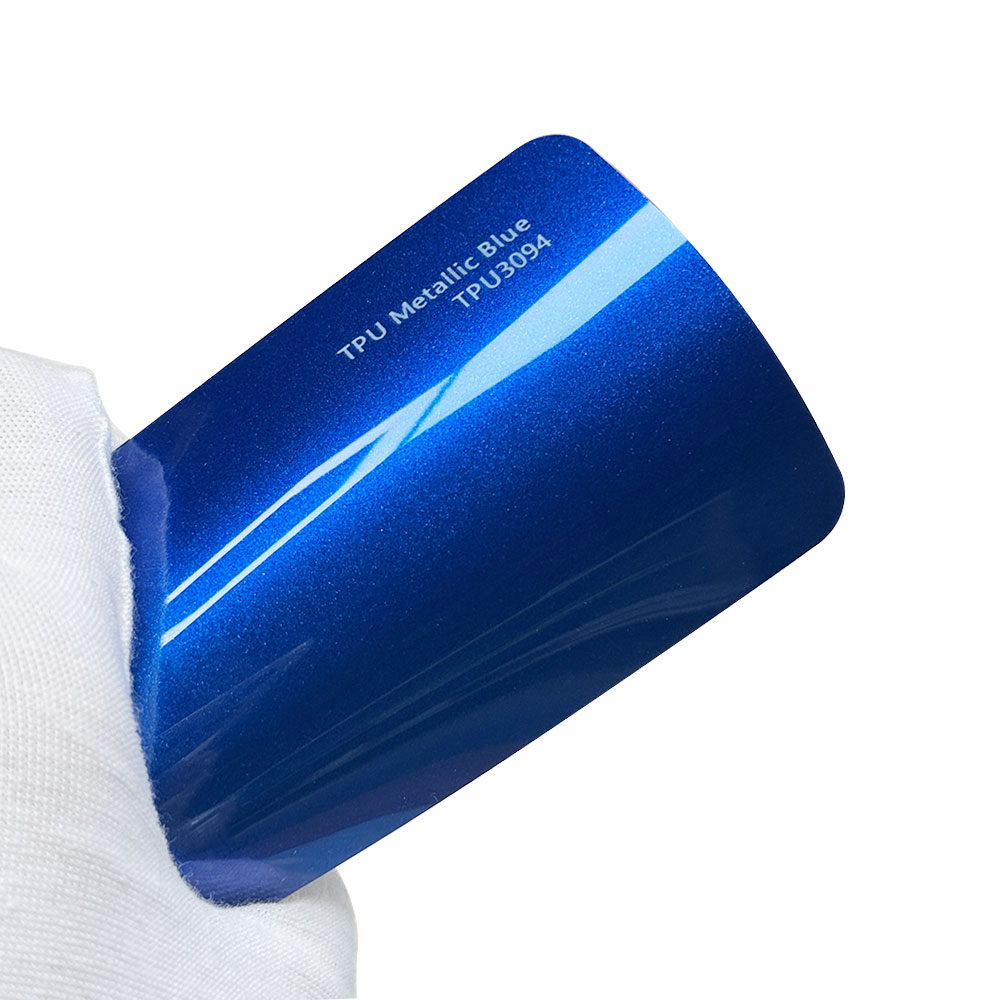
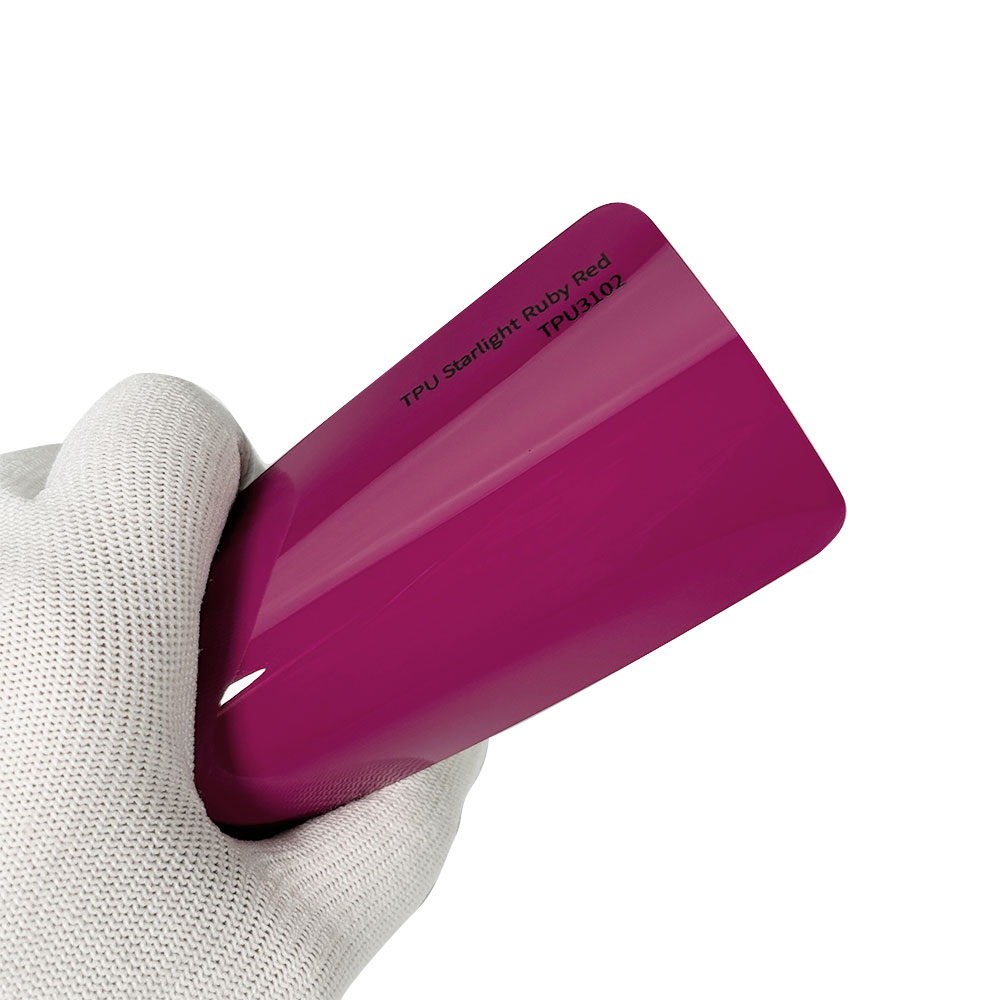
Color PPF is a thermoplastic polyurethane (TPU) film applied directly over your car's factory paint. Unlike a simple vinyl wrap, this paint protection film delivers two distinct benefits simultaneously: a dramatic color change and robust physical shielding. The film's integrated color layer sits beneath a transparent top coat, so you get vibrant hues without sacrificing the self-healing and scratch-resistant properties that make PPF valuable.
The installation process matters as much as the material itself. A high-grade color paint protection film uses a pressure-sensitive acrylic adhesive with air-release channels. This adhesive has a low initial tack, which means the installer can reposition the film before it bonds permanently. The bond forms gradually and securely without pulling on the clear coat. Proper technique—including edge-sealing and tension-free application—ensures the film adheres without stressing your vehicle's underlying paint. When removal becomes necessary, heat application and a 45-degree peel angle release the film cleanly, preventing micro-lifting.
Thickness plays a critical role in protection levels. Professional PPF films typically range from 4 to 12 mils. Thinner films (4 to 6 mils) suit standard urban driving. Thicker films (8 to 12 mils) provide superior defense against scratches, chips, and road debris. Professional color paint protection films offer a range of thickness options, balancing flexibility with impact resistance.
What Is Traditional Paint?
Traditional paint refers to the factory-applied or aftermarket liquid coating that provides your car's base color. This multi-layer system includes primer, base coat, and clear coat. The clear coat—the protective top layer—comprises about 40% of the total thickness. For 2022 vehicles, average factory paint thickness measures approximately 110 microns (4.3 mils), with most cars falling between 95-125 microns.
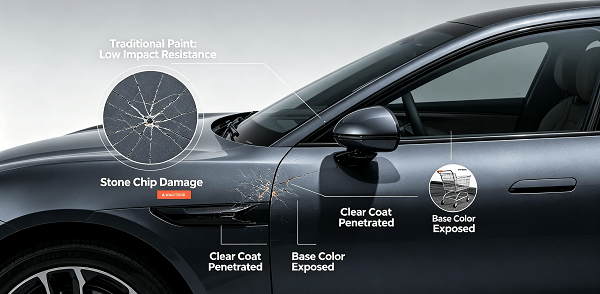
Traditional painting offers zero impact resistance. A stray pebble or shopping cart collision can penetrate the clear coat and expose the base color. Once damaged, you face costly touch-ups or complete panel repainting. The appearance may satisfy initially, but the quality degrades under sun exposure, acid rain, and road salt. Unlike color paint protection film, traditional paint cannot self-heal, repel water, or resist yellowing. You must rely on waxing and polishing to maintain its finish—a recurring expense that never truly restores the original factory condition.
Cost Comparison: Upfront vs. Long-Term
Initial Investment Breakdown
When you examine the sticker price, the cost differences between color PPF and traditional painting become clear. A full PPF installation typically runs between $5,000 and $8,000. A high-quality repaint can cost anywhere from $5,000 to $20,000 depending on the shop and finish quality. At first glance, painting appears cheaper on the lower end. But the installation process for the film offers a critical advantage: it preserves your factory paint. That means you avoid the depreciation hit that comes with a repainted vehicle. The coating on a repainted car, even when done well, never matches the original factory finish in thickness or durability. So while the upfront cost may seem comparable, the value of keeping your original paint intact is significant.
Cost Per Year of Protection
The real financial picture emerges when you calculate annual expenses. PPF lasts up to 10 years with proper care. A high-quality repaint typically requires ongoing maintenance and may need touch-ups over time. That means you may pay for the paint application twice over a decade. On top of that, maintenance costs add up.
Maintenance Item
Traditional Paint (Annual Cost)
PPF-Protected (Annual Cost)
Professional Waxing/Sealing
$250/year
$0 (Not required)
Rock Chip Repair/Repainting
$160–$400/year
$0
Paint Correction (Swirl Removal)
$300/year
$0
As the table shows, a repainted finish demands $710 to $950 annually just for upkeep. PPF requires nothing extra. If you need just three touch-up jobs per year for minor dings, you're looking at an annual expenditure of between $1,200 and $1,500. When compared against the initial cost of paint protection film, which typically incurs no extra fees after installation, the savings become clear. The longevity of the film transforms the value proposition. Over 10 years, a vehicle with a repainted finish may set you back $7,100 to $9,500 in maintenance alone, plus a repaint. A PPF-protected vehicle incurs $0 maintenance costs and preserves the factory paint underneath. That's a cost difference of thousands of dollars. The lifespan of the film guarantees you pay once for protection at installation, not repeatedly for repairs. The benefit of this approach becomes undeniable when you calculate total ownership expenses.
Why Color Paint Protection Film Offers Superior Durability
Self-Healing and Scratch Resistance
Your vehicle faces constant assault from daily driving. Swirl marks from automatic car washes, brush marks from careless detailing, and fine scratches from road debris all degrade a traditional paint finish. A color paint protection film eliminates this concern through advanced self-healing technology. The TPU material possesses a memory property that allows minor surface disturbances to disappear when exposed to heat. You simply park in the sun or pour warm water over the affected area, and the film returns to its original smooth state.
The healing process depends on scratch depth and temperature. Light surface scratches—swirl marks, fine scuffs, and minor brush marks—require only 80°F–95°F of film surface temperature to repair. Deep scratches or heavy marring need 120°F or higher. This temperature threshold means most scratches heal during normal driving in warm climates or with a quick heat application from a professional-grade tool. The film is designed to fix tiny scratches from daily use — swirl marks, light car wash scratches, and brush-by marks. If the scratch is shallow and on the surface, the film can usually repair itself once it gets warm. This confirms that the maximum repairable depth is limited to surface-level disturbances, not measurable cuts or gouges.
This self-healing capability delivers a critical advantage over traditional painting. A repainted surface cannot repair itself. Every scratch remains permanent, requiring costly paint correction or touch-up work. The durability of the film means your vehicle maintains its showroom appearance without constant intervention.
UV and Environmental Protection
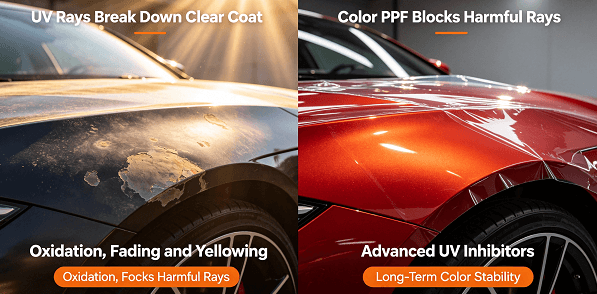
Sun exposure destroys traditional paint over time. UV rays break down the chemical bonds in the clear coat, causing oxidation, fading, and yellowing. A color paint protection film blocks these harmful rays while preserving the vibrant color change you selected. Premium films incorporate advanced UV inhibitors that prevent yellowing, fading, or hazing over time, ensuring long-term UV stability essential for regions with significant sun exposure.
Accelerated weathering lab results show long‑term durability of the paint protection film.
Equivalent years are lab‑based estimations; real performance depends on local climate.
Exposure Duration
Film Performance
500h (~1‑year lab equivalent)
Zero color shift, gloss retention>95%
1,500h (~3‑year lab equivalent)
Minimal color shift ΔE<2, almost no yellowing
3,000h (~6‑7‑year lab equivalent)
Minor gloss drop, ΔE 3‑4, barely visible color change
Premium colored PPF can survive at least 3,000 QUV hours before serious discoloration; economy films fail after 1,000 hours. This lifespan difference matters when you consider the cost of replacing a failed film versus the benefits of a product that maintains its appearance for years. Color choice also affects performance. Dark colored PPF runs hotter—up to +15°C surface temperature—but yellowing remains invisible, and adhesive life spans 6-8 years. Light colored PPF stays cooler, yet any yellowing becomes obvious, requiring premium UV packages for an 8-10 year lifespan. Your selection should account for your climate and aesthetic preferences.
The protection extends beyond UV rays. The film's hydrophobic coating repels water, dirt, and environmental contaminants like bird droppings and tree sap. These substances cannot etch into the film surface, preserving the quality of your finish. Traditional paint offers no such defense. Acid rain, road salt, and industrial fallout gradually corrode the clear coat, accelerating degradation. The installation of a paint protection film creates an impermeable barrier between your vehicle and the environment. This barrier maintains the factory paint's integrity indefinitely. The longevity of the film—up to 10 years—ensures you enjoy this protection without reapplying or repainting. The benefits compound over time, making color ppf the clear choice for owners who value their vehicle's finish.
Maintenance and Care: PPF vs. Painted Surfaces
Cleaning and Hydrophobic Benefits
Your washing routine changes dramatically with a color paint protection film. Traditional paint demands constant attention. You must apply wax every 2–3 months to maintain gloss. Each application requires hours of buffing and polishing. The film eliminates this entire cycle. Its hydrophobic coating creates a surface where water beads instantly. Those beads lift away dirt and contaminants before they bond to the surface. You simply rinse and dry. No waxing. No polishing. No recurring schedule.
Maintenance Aspect
Traditional Wax
PPF
Reapplication frequency
Every few weeks to a few months
5–7 years (no reapplication)
Typical upkeep tasks
Frequent waxing and buffing
Routine washes and occasional inspections
This lower maintenance approach saves you hundreds of dollars annually. The benefits extend beyond convenience. Less scrubbing means fewer micro-scratches. The self-healing top layer repairs any minor marks with heat. Your vehicle stays cleaner for longer periods, especially in dusty environments. The durability of the hydrophobic layer ensures consistent performance for years.
Repair and Replacement Ease
Damage to a painted panel forces a costly respray. A single-panel repaint typically costs between $500 and $1,500. If blending with neighboring panels becomes necessary, the cost can increase. The installation of a paint protection film changes this equation entirely. Replacing a single film panel costs approximately $650. You restore full protection without touching the factory paint underneath. Removal safety matters equally. Professional technicians use controlled heat and a 45-degree peel angle. They dissolve any adhesive residue with paint-safe solutions rather than scraping. This technique leaves the clear coat undamaged. The longevity of your factory finish remains intact.
Repainting, by contrast, is permanent and irreversible. You cannot undo a respray without significant cost and effort. These maintenance tips for color paint protection film ensure your vehicle retains its showroom appearance. The ppf layer absorbs the daily abuse while your original paint stays pristine. When the film reaches the end of its lifespan, you remove it and reveal untouched factory paint. That reversibility alone justifies the investment.
Resale Value and Appearance Retention
Preserving Factory Paint
Your vehicle's resale value hinges on one factor above all others: the condition of its original paint. Buyers scrutinize every panel for oxidation, swirl marks, and rock chips. A car with visible paint damage loses negotiating power immediately. A color paint protection film changes that equation entirely. The film absorbs the daily abuse—UV rays, acid rain, bird droppings, and road debris—while your factory paint remains untouched beneath. The financial impact is measurable. Vehicles with PPF often retain a higher resale value compared to unprotected vehicles, especially when the original paint is preserved. That difference translates to thousands of dollars on a modern vehicle.
The protection also preserves the clear coat's integrity. Unprotected cars show visible oxidation, loss of gloss, and clear coat edge failure within five to seven years. A film-protected car reveals showroom-condition paint when the film is removed.
Aspect
Unprotected Vehicle
PPF-Protected Vehicle
Paint condition
Visible oxidation, loss of gloss, micro-marring, rock chips
Paint under film remains in showroom condition
Contaminant damage
Etching from contaminants, swirl marks
No etching, no oxidation on protected surfaces
Clear coat integrity
Thickness permanently reduced
Not exposed to UV, heat, or contaminants
Resale value
Impacted by visible paint damage
Preserved; paint looks essentially new when film is removed
The benefits compound over time. A paint protection film also filters UV penetration, disperses heat across its surface, and absorbs impact from small chips. Your vehicle retains its appearance and value without constant detailing.
Color Consistency and Customization
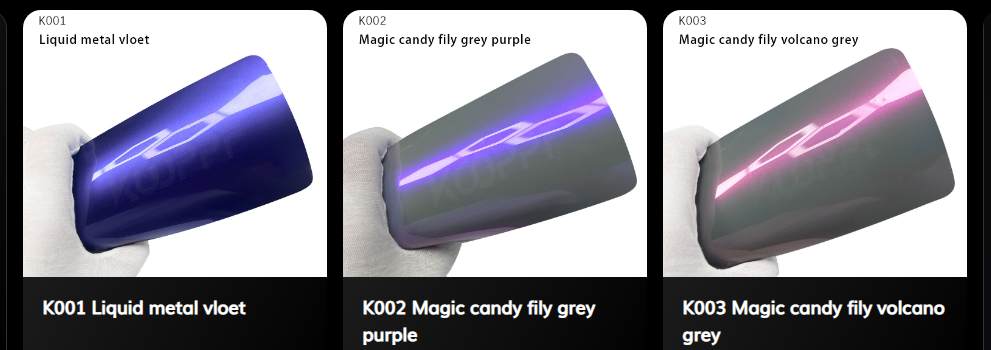
Customization no longer requires sacrificing resale value. KOOFILM's color paint protection film offers a wide range of color options, including gloss, matte, metallic, and pearlescent finishes. You achieve a dramatic color change while preserving the factory paint underneath. When you sell, the film peels off cleanly, revealing the original finish. The quality of the color change depends on manufacturing precision. KOOFILM ensures batch consistency through rigorous quality control, so every roll delivers the same premium performance. This longevity means your color change stays vibrant for years. The cost of customization becomes an investment in appearance that pays off at resale time.
You deserve a product built on precision, not guesswork. KOOFILM operates a large-scale facility with high monthly production capacity. This scale alone separates the brand from smaller operations that struggle with consistency. But volume means nothing without control. KOOFILM invests in German-imported equipment that maintains exacting tolerances across every production run. Dedicated inspectors examine each batch comprehensively, checking thickness, gloss, and adhesive performance. Every roll is manufactured with full traceability, so you know precisely when and where it was made.
This rigorous system delivers tangible results. When you choose KOOFILM's color paint protection film, you receive a product that matches the previous batch exactly. The color you select today will match the color you order next year. Small factories cannot promise this level of uniformity. Their raw materials fluctuate, their equipment drifts, and their quality checks remain inconsistent. You avoid those risks entirely with KOOFILM. The manufacturing process also protects your vehicle's finish. Each film layer bonds together under controlled conditions, ensuring the adhesive applies evenly. This precision prevents lifting, bubbling, or premature edge failure. Your installation proceeds smoothly because the film behaves predictably. The benefits of this engineering discipline become apparent the moment you touch the material. It feels substantial, flexible, and precisely calibrated.
Warranty and Long-Term Peace of Mind
KOOFILM color paint protection film is designed for long-term performance and durability. This coverage protects you against peeling, yellowing, and cracking—the three most common failure modes for inferior films. Traditional paint offers no such guarantee. Once you repaint, you assume all risk. If the clear coat fails or the color fades, you pay again for correction. The long-term design reflects confidence in the product's longevity. KOOFILM knows the film will perform because testing proves it. Accelerated weathering tests simulate years of sun exposure, confirming the color change remains stable. The self-healing layer continues functioning throughout the film's lifespan. You receive protection that lasts a decade or more without degradation.
KOOFILM's commitment to quality extends beyond the product itself. The company stands behind every roll with responsive technical support. You receive guidance on maintenance, removal, and care throughout the film's life. This partnership ensures you maximize the benefits of your investment. When you choose KOOFILM, you choose a manufacturer that treats your vehicle with the same care you do.
Discover KOOFILM Color PPF — Explore our wide range of colors and superior protection. Transform your vehicle today.
Environmental and Material Considerations
Eco-Friendly Adhesives and Removal
Your choice of surface protection carries environmental consequences beyond your driveway. Color paint protection film uses a low-stick pressure-sensitive adhesive. This adhesive bonds securely during installation yet releases cleanly when you need removal. No harsh solvents, no residue, no damage to your factory paint. The removal process requires only controlled heat and a careful peel angle. You leave nothing behind except pristine original paint.
The environmental benefits extend to the manufacturing process itself. The use of advanced adhesives helps reduce emissions compared to traditional paint application. This means your vehicle customization does not contribute to air pollution. The film you install today represents a cleaner alternative to many other surface treatments available. The application of vinyl wrap to your vehicle produces essentially no volatile organic compound emissions. This clean profile matters for professional installers too. Shops that apply paint protection film avoid the ventilation requirements, respirator protocols, and hazardous waste disposal that paint booths demand. Your installer works in a safer environment. You receive a superior product. The cost of this approach remains competitive with traditional painting while delivering better environmental outcomes.
Paint Application and Chemical Exposure
Traditional painting tells a different story. Every respray releases volatile organic compounds into the atmosphere. These chemicals contribute to smog formation and pose health risks to applicators. The numbers reveal the scale of the problem:
Paint Type
VOC Emissions (g/L)
Solvent-Based (Pre-2006)
700–900
Waterborne (Current)
100–300
Even modern waterborne paints emit substantial VOCs. The application process also generates hazardous waste—overspray, contaminated solvents, and cleaning materials. Disposal requires special handling and regulatory compliance. You absorb these environmental costs indirectly through higher shop fees and stricter permitting requirements. The protection you gain from a respray does not justify this environmental burden. A repainted surface offers zero impact resistance and degrades under UV exposure. Your color change fades within years. The quality of the finish depends on the applicator's skill and environmental conditions during curing. Any imperfection means another respray, another round of VOC emissions, another cycle of waste.
Choosing ppf eliminates this entire chain. The film applies without fumes, cures without emissions, and removes without hazardous waste. Your vehicle receives superior protection while your environmental footprint shrinks. The color change you select stays vibrant for a decade. This combination of performance and responsibility makes ppf the clear choice for conscientious owners.
Color PPF is not just a protective layer. This color paint protection film beats traditional paint with superior protection, durability, lower cost, and reversibility benefits. The film preserves your vehicle's resale value and offers easy color change. Factory paint stays pristine underneath. The film enables future color change. Paint stays protected. KOOFILM's long-term design ensures lasting perfection. Explore our Color PPF range for your vehicle. Protect your investment.
FAQ
How Long Does Color PPF Last Compared to Paint?
KOOFILM's color PPF is designed for long-term durability. The film's self-healing layer maintains its protective qualities throughout its lifespan.
Can You Remove Color PPF Without Damaging the Original Paint?
Yes. The low-stick adhesive releases cleanly with controlled heat and a 45-degree peel angle. Your factory paint remains untouched beneath the film. This reversibility gives you flexibility that repainting never offers.
Does Color PPF Require Special Maintenance?
No. The hydrophobic coating repels water and dirt, so routine washing suffices. You skip waxing, polishing, and paint correction entirely. This protection saves you hundreds annually compared to maintaining a traditional painted surface.
Looking for a Reliable Color PPF Manufacturer?
KOOFILM is a professional automotive protective film manufacturer focused on global wholesale and OEM/ODM services.We have a full industrial chain for PPF , which means not only dowe make our own TPU base film, with imported TPU master batch.but also the top-coating for PPF,except the adhesive from Ash-land USA.