



What is PE protective film
Key Takeaways
PE protective film is a low-cost, short-term layer that guards surfaces during handling, storage, and shipping.
You can pick from LDPE, LLDPE, or HDPE types and different thicknesses to fit your protection needs.
For car paint protection that lasts a long time, choose KOOFILM PPF instead of PE film.
What Is PE Protective Film?
You run into PE protective film as a short-term guard for surfaces. This material mixes a polyethylene base layer with a pressure-sensitive adhesive. The adhesive usually uses natural rubber or acrylic chemistry. You peel the film off after handling, storage, or transit. No residue stays on the surface.
Composition of PE Protective Film
The base layer gives the film its structure. Manufacturers pick polyethylene resin based on the protection level you need. A pressure-sensitive adhesive sits on one side. This adhesive bonds lightly to surfaces. You press the film down by hand or with a roller. The bond holds during normal handling. When you take the film off, the adhesive releases cleanly.
Thickness changes with the job. For industrial surface protection, PE protective film thickness usually falls within the range of about 30 to 150 microns. The exact thickness depends on the surface being protected, the manufacturing process, expected mechanical stress, and the required duration of protection.
Application / Protection Level | Thickness Range (microns) |
|---|---|
Storage protection | 30–50 |
General sheet handling | 50–70 |
Fabrication | 70–100 |
Heavy fabrication | 100–120 |
Extreme mechanical protection | 120–150 |
Laser cutting (metal) | 70–150 |
Some PE protective films include additives for outdoor use. UV stabilizers stop breakdown from sunlight. Antioxidants protect the polyethylene during processing. Processing aids improve melt flow and reduce surface defects. These additives change specific properties. They do not replace proper resin selection.
A UV resistant PE protective film is a specially made version of standard PE protective film. During the film manufacturing process, UV stabilizers are added into the PE resin formulation to improve resistance against ultraviolet exposure and weather-related degradation.
Types of Polyethylene Used
Three common polyethylene grades show up in protective films. Each grade offers different properties for your application.
LDPE is a homopolymer. It is flexible and not as strong or dense as other grades. You use LDPE for light-duty protection where conformability matters. Its continuous operating temperature stays below 70°C. Intermittent exposure can reach up to 90°C. The softening point is around 90°C. The melting point ranges from 105–115°C. LDPE performs well in cold conditions down to -50°C.
LLDPE is a copolymer of ethylene and a longer olefin. This structure gives it improved tensile strength and conformability compared to LDPE. You get better toughness for general handling applications.
HDPE is the strongest and toughest of the three. Its tight cell structure provides high tensile strength. HDPE handles continuous temperatures above 80°C. The softening point is around 110°C. The melting point ranges from 120–130°C.
Polymer | Tensile Strength |
|---|---|
LDPE | 8–25 MPa |
HDPE | 26–33 MPa |
LLDPE offers improved tensile strength compared to LDPE. HDPE has stronger tensile strength than LLDPE. You select the grade based on your protection needs and environmental conditions.
Applications of PE Protective Films
Common Uses Across Industries
PE protective films show up in lots of industries. Wood, glass, carpets, and car parts all depend on these films during making, shipping, and storing. The car industry has the biggest share of the PE protective film market. More need for scratch and damage protection keeps it on top. Electronics is the fastest-growing part. Thinner, more delicate devices need better protection. The solar power market is also the fastest-growing use by money made. More solar energy use and the need for good protection drive this growth. Transportation is the fastest-growing user group in the protective films market. These films protect vehicles and parts during making, storing, and final delivery. They block dust, scratches, dirt, UV rays, and weather damage. This keeps surfaces clean through the whole shipping process.
How the Adhesive Works
A low-tack pressure-sensitive adhesive makes PE protective films work. You push the film onto a surface by hand or with a roller. The adhesive sticks lightly. This bond holds during normal handling and transit. The low-tack formula makes sure it comes off clean. No residue stays behind when you peel the film off. This makes PE protective films great for short-term protection. You can put them on and take them off without harming the surface underneath. The adhesive strength fits short-term use. It does not leave sticky marks or need solvents to clean up. For glass, wood, or car parts, this clean release saves time and work. The polyethylene base layer gives the physical barrier. The adhesive keeps that barrier in place until you no longer need it.
Benefits and Limitations of PE Protective Film
Main Advantages of PE Protective Film
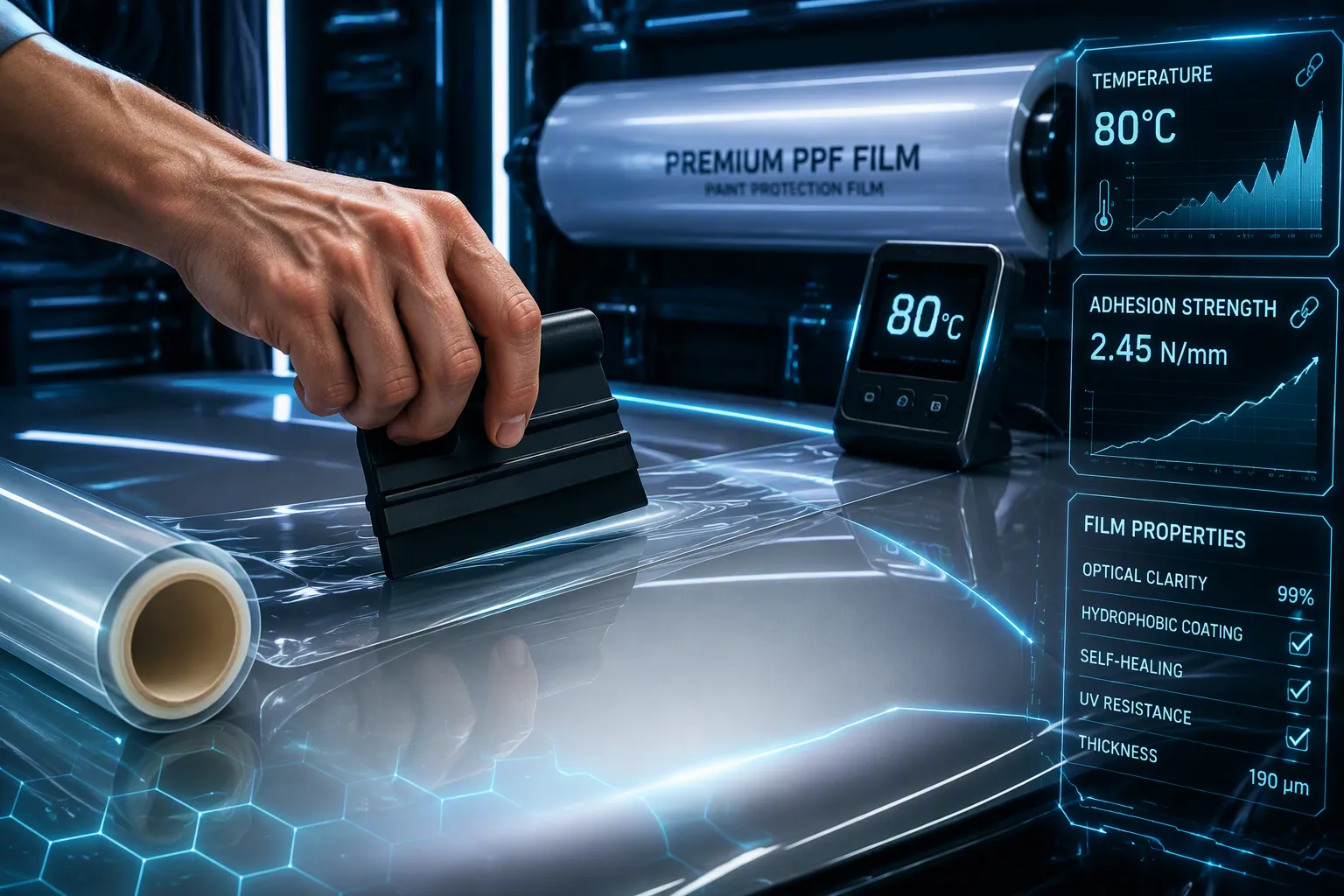
PE protective films give you several useful benefits. Cost is the biggest one. These films cost much less than special alternatives. You can cover large surfaces without spending too much. Clearness is another strong point. Transparent PE protective films let you check the surface below without taking the film off. Water resistance keeps moisture out during storage and transit. Rot resistance means the film will not break down in damp conditions. UV resistance protects surfaces from sun damage during outdoor storage. Putting it on is easy. You press the film down by hand or with a roller. Stopping scratches is the main job. A pencil hardness of about 2–3H is common for scratch-resistant PE protective films sold today. One test method presses a 3H pencil at a 45-degree angle with 500G force for 10 times. If no scratch shows up, the film meets the 3H hardness requirement. These advantages of PE in protective films make them a smart choice for temporary surface guard.
Temperature resistance matters for your application. PE film usually works well up to about 80°C and is best for low to medium-temperature uses.
Film Type | Temperature Resistance |
|---|---|
PP Film (Polypropylene) | Up to 120°C |
PE Film (Polyethylene) | Up to 80°C (176°F) |
A commercial PE surface protection tape with removable acrylic adhesive is rated for about 70°C for one hour. This value should not be used for every PE protective film.
When to Choose KOOFILM PPF Instead
PE protective films have limits. They do not heal themselves. Small scratches stay visible. Heat resistance is limited. The polyethylene base layer softens at high temperatures. These films are not good for long-term automotive paint protection. You need a premium alternative for demanding automotive applications.
KOOFILM’s PPF solves these problems. Clear PPF provides self-healing technology, hydrophobic coating, and UV resistance. Color PPF adds over 200 shades with the same protective benefits. Matte PPF delivers a satin finish without changing your paint color. Warranty coverage varies by model. The Dynasty and K30 NANO models carry a 10-year warranty. The King Max offers an 8-year warranty. The King Plus provides a 7-year warranty. Other models like the King, Queen, and Queen Pro come with a 5-year warranty. This range gives you options for different budgets and protection needs. Choose PE film for basic, short-term coverage. Choose KOOFILM PPF for high-value surfaces that need lasting protection.
PE protective film is a low-cost, temporary surface guard. PE types include LDPE, LLDPE, and HDPE. PE films protect wood, glass, and car parts. PE offers affordability, but no self-healing. For lasting vehicle protection, choose KOOFILM PPF with self-healing and color options. Pick PE protective films for short-term coverage; choose polyethylene-based PPF for high-value surfaces.
FAQ
What thickness do you need for general surface protection?
You pick the thickness based on what you are doing. Storage protection uses 30–50 microns. General sheet handling needs 50–70 microns. Heavy fabrication requires 100–120 microns. Match the film to your specific job.
Can you apply pe protective films to car paint for long-term use?
No. These films work for temporary protection during transit and storage. They do not heal themselves. Heat resistance is limited. For lasting automotive paint protection, choose a premium PPF instead.
How do you remove pe film without leaving residue?
You peel the film off slowly by hand. The low-tack adhesive comes off cleanly. You do not need solvents. The surface stays free of sticky marks. This clean removal saves you time and effort.



