



What to Look for in China PPF Factory Window Film for UV Protection, Glare Reduction, and Privacy
Window film from a China PPF factory is a high-performance PET or TPU-based sheet applied to automotive glass. Its core function is to block harmful UV radiation, reduce solar heat and glare, and enhance cabin privacy—all while preserving optical clarity for safe driving.
For automotive film distributors and installers, sourcing from a dedicated PPF and window film manufacturer means access to consistent batch quality, verifiable performance data, and OEM/ODM flexibility. This guide breaks down how premium films from a China PPF factory address the three most critical passenger concerns: UV protection, glare reduction, and privacy.
Key Takeaways
UV Protection: Premium nano-ceramic films block up to 99% of harmful UV rays, protecting skin and preventing interior fading.
Glare Reduction: High-performance films cut harsh solar glare and headlight dazzle, reducing driver eye strain on long journeys.
Privacy: VLT options from 5% to 70% allow distributors to tailor cabin privacy for different customer preferences and local regulations.
Signal-Friendly: Non-metallic ceramic construction ensures zero interference with GPS, mobile, and toll transponder signals.
How Does Window Film from a China PPF Factory Block UV and Reduce Glare?
Window film works through a combination of material chemistry and optical engineering. The film is constructed from a durable PET base, coated with nano-ceramic particles or carbon layers, and finished with an adhesive system that bonds to the glass.
UV Blocking Mechanism
UV radiation is invisible but damages skin and degrades interior materials. High-quality window film from a China PPF factory incorporates UV absorbers directly into the film structure. These absorbers capture ultraviolet photons before they can penetrate the glass.
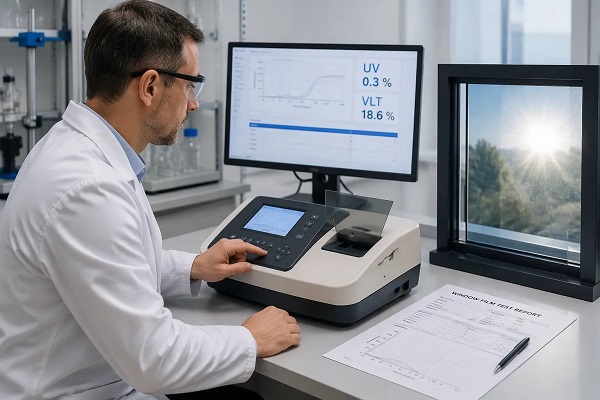
KOOPPF nano-ceramic films consistently deliver 99% UV rejection (UVR), as shown in product specifications for the HQ and Violet Glow series. This level of protection significantly reduces the risk of skin damage and prevents dashboard cracking, seat fading, and interior discoloration.
Glare Reduction Mechanism
Glare occurs when intense light—from the sun or oncoming headlights—scatters across the windshield or side windows. This causes eye fatigue and reduces reaction time.
Window films reduce glare by controlling visible light transmission (VLT). A film with a lower VLT absorbs or reflects more visible light, softening harsh brightness. KOOPPF offers VLT options ranging from 5% to 70%, allowing distributors to recommend the right balance of glare reduction and night-time visibility for each market.
What Are the Key Performance Differences Between Window Film Types?
Not all window films perform equally. The construction and technology inside the film determine its UV, heat, and privacy capabilities. The table below compares the primary options available from a China PPF factory.
| Film Type | Core Technology | UV Rejection (UVR) | Infrared Rejection (IRR) | Best For |
|---|---|---|---|---|
| Nano-Ceramic | Non-conductive ceramic particles | Up to 99% | 90%–99% | Premium UV protection, signal-friendly |
| Carbon | Carbon particle enhancement | High | 70%–85% | Budget-conscious privacy and UV block |
| Metal-Sputtered | Multi-layer metal coating | High | 80%–92% | Maximum heat rejection (may affect signals) |
Data reflects representative performance ranges for products manufactured by a China PPF factory such as KOOPPF.
How Does VLT Choice Affect Privacy and Driving Safety?
Visible Light Transmission (VLT) is the percentage of visible light that passes through the film. It directly controls the balance between privacy and outward visibility.
5%–20% VLT: Maximum privacy and a dark, sleek appearance. Best suited for rear passenger windows. Not legal for front windshields in most regions.
30%–50% VLT: A practical middle ground. Provides meaningful privacy and glare reduction while maintaining clear outward visibility for side windows.
70%–90% VLT: Near-transparent films designed for windshields and front side windows. Delivers UV and heat rejection without compromising night-time driving safety.
KOOPPF manufactures window films across the full VLT spectrum, enabling distributors to stock a complete range that meets local regulations and customer preferences.
Why Source Window Film from KOOPPF, a China PPF Factory?
Choosing the right manufacturing partner is as important as choosing the right film. KOOPPF operates a fully integrated production facility, controlling everything from raw material selection to precision coating and final quality inspection.
Full-Chain Control: In-house TPU casting, coating, and laminating ensure batch-to-batch consistency in color, clarity, and performance.
Signal-Friendly Nano-Ceramic Technology: KOOPPF ceramic films reject heat without interfering with GPS, mobile, or satellite signals—a critical advantage over traditional metallic films.
OEM/ODM Flexibility: Private labeling, custom packaging, and flexible MOQs (from 1 roll) support distributors and brand owners in launching their own window film lines.
Verifiable Quality: ISO 9001, IATF 16949, and REACH certifications, backed by in-house UV, weathering, and adhesion testing.
KOOPPF Automotive Window Film
Nano-ceramic and carbon window films with up to 99% UVR, 99% IRR, and VLT options from 5% to 70%. Available in 1.52m × 30m rolls. OEM/ODM and free A4 samples available.
Explore Window Film Specifications →Frequently Asked Questions
Does window film from a China PPF factory block 100% of UV rays?
Premium nano-ceramic films from KOOPPF block up to 99% of UV radiation. While no film blocks 100%, 99% rejection is sufficient to protect skin and dramatically slow interior fading.
Will window film interfere with my car's GPS or mobile signal?
Nano-ceramic films do not contain metal layers, so they do not interfere with electronic signals. Traditional metal-sputtered films may cause interference. KOOPPF recommends ceramic technology for vehicles with sensitive electronics.
What VLT should I choose for front side windows?
Most regions require front side windows to maintain at least 35% VLT, and windshields often require 70% or higher. Distributors should confirm local regulations before recommending a specific VLT for front glass.
Do you offer OEM/ODM services for window film?
Yes. KOOPPF provides full OEM/ODM support, including private labeling, custom packaging, and branded technical documentation. The MOQ starts at 1 roll, with lead times of 7–15 days for standard orders.
Ready to Source Premium Window Film from a China PPF Factory?
Request free A4 samples, discuss OEM/ODM terms, or get a wholesale quote for nano-ceramic and carbon window films directly from KOOPPF.
Get a Wholesale Quote →Conclusion
Window film from a China PPF factory solves three universal passenger concerns: UV protection for health and interiors, glare reduction for driving comfort, and privacy control for personal security. The technology behind the film—nano-ceramic construction, UV absorbers, and precise VLT engineering—determines how well it performs.
For distributors and installers, sourcing from a manufacturer with full-chain control ensures consistent quality, signal-friendly performance, and the OEM/ODM flexibility needed to build a competitive window film portfolio. KOOPPF delivers that foundation—backed by verifiable specifications, in-house testing, and responsive after-sales support.





